
By Jordan Collins | Technology Content Writer
Summarize this blog post with: ChatGPT | Perplexity | Claude | Grok
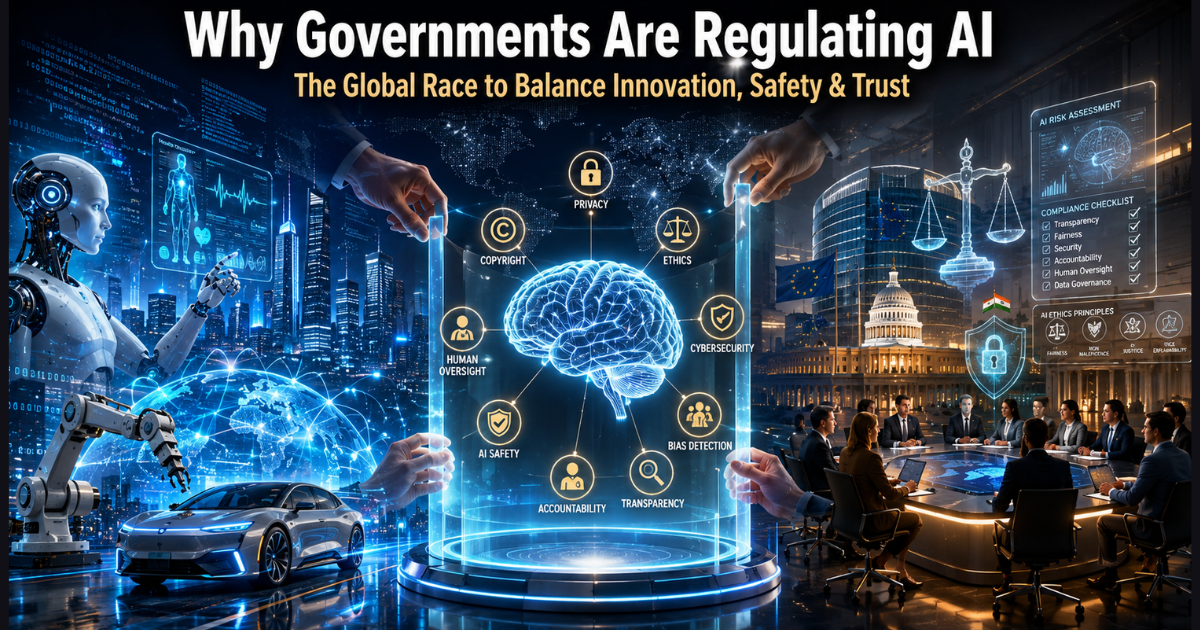
You’ve seen the headlines—another AI law here, an executive order there, another summit where world leaders talk about “guardrails.” What most of that coverage skips is the actual reasoning behind the rush. In this guide, I’ll walk through why governments are regulating AI right now, what’s genuinely at stake, and how the EU, US, and China are handling it in very different ways.
Key Takeaways
- AI regulation is the set of laws and policies that govern how AI systems get built, tested, and deployed—and it’s less about stopping AI than about managing what happens when it goes wrong.
- Governments are acting now because AI’s capabilities outran the legal frameworks meant to contain its risks, especially after generative AI went mainstream.
- The core risks driving regulation are safety failures, biased outcomes, job displacement, misinformation, and national security exposure.
- The EU, US, and China have taken genuinely different paths—comprehensive risk-based law, a fragmented patchwork of state and federal rules, and centralized state control, respectively.
- A risk-tiered approach (regulate based on potential harm, not the technology itself) has become the dominant model worldwide, even outside the EU.
- Businesses that get ahead of compliance now—inventorying AI systems, documenting decisions—avoid expensive retrofits later.
- Global coordination on AI rules is still thin, so companies operating across borders are stuck navigating a patchwork for the foreseeable future.
What Is AI Regulation, Exactly?
AI regulation is the collection of laws, standards, and government policies that dictate how artificial intelligence systems get designed, tested, deployed, and monitored. It’s not one law—it’s an expanding web of national statutes, sector rules, and international guidelines that often overlap and occasionally contradict each other.
Here’s the thing that trips people up: AI regulation isn’t really about the technology itself. It’s about consequences. A recommendation algorithm suggesting a bad movie is low stakes. An algorithm deciding whether you qualify for a mortgage is a completely different animal. That distinction—consequence over mechanism—is why regulators keep coming back to risk-based frameworks instead of blanket rules.
I’ve seen this play out with hiring tools specifically. A company trains a screening algorithm on ten years of past hiring decisions, and if those decisions leaned toward one demographic, the algorithm quietly reproduces that pattern at scale—no human ever has to make a biased call again, the system just does it automatically. That’s the kind of silent, scaled harm regulation is designed to catch before it spreads, and it’s a big reason lawmakers stopped treating AI as “just software.”
Nearly 90% of Europeans believe AI requires careful management — Source: Eurobarometer survey/Council of the European Union, 2025. That’s not a fringe opinion anymore; it’s closer to consensus, which gives lawmakers real political room to act.
Why Are Governments Regulating AI Right Now?
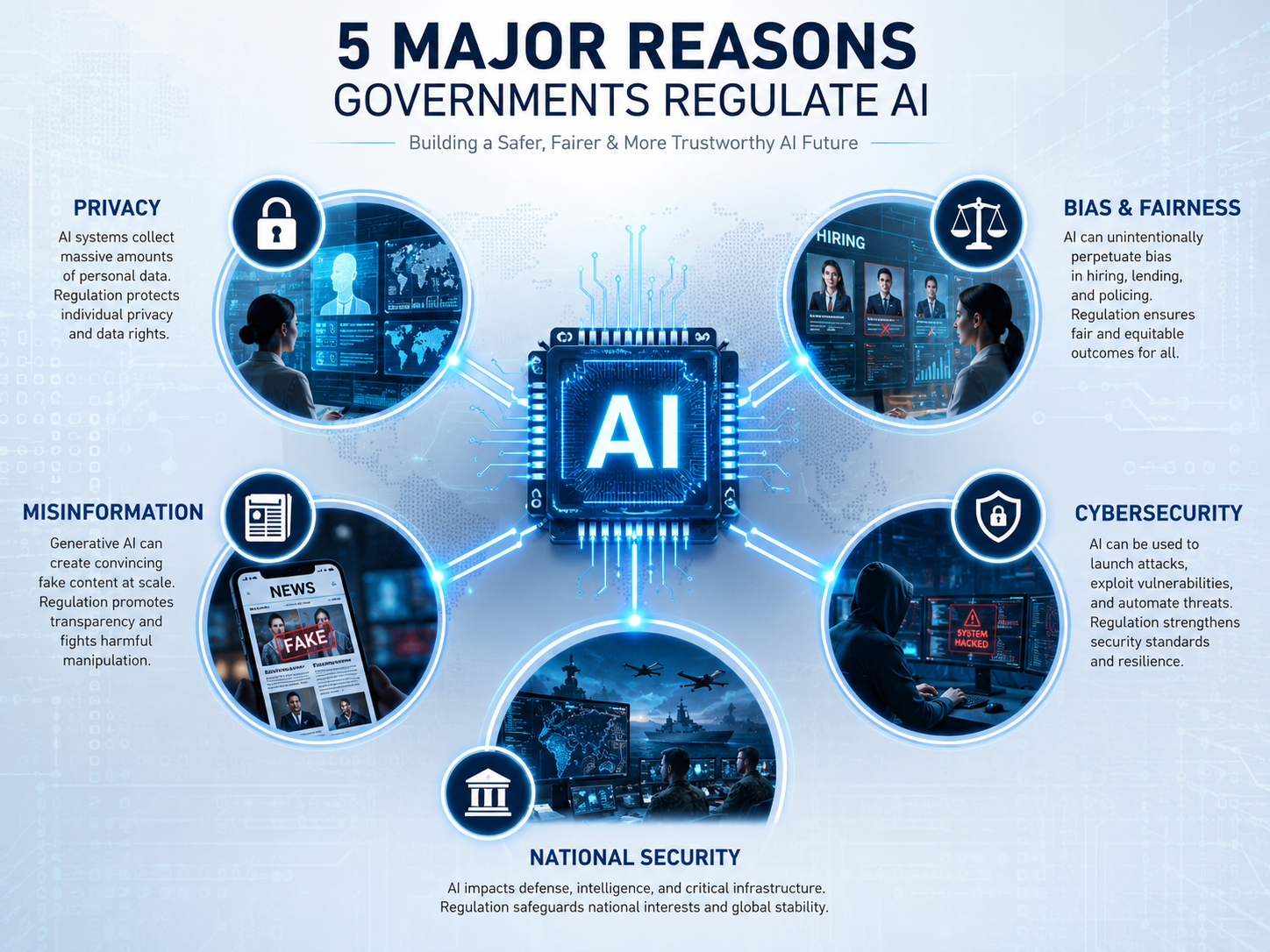
Governments are moving on AI regulation because the technology’s capabilities outpaced the legal systems meant to manage its risks—generative AI adoption exploded after 2023, and lawmakers found themselves reacting to deepfakes, biased hiring tools, and surveillance overreach without any existing playbook.
This isn’t a new pattern, honestly. The internet, social media, and biotech all followed a similar arc: innovation moves fast, harm shows up in headlines, and law shows up years late. What’s different with AI is the speed and scale—one bad model deployed at a large company can affect millions of decisions overnight, not gradually. If you’re working with AI tools daily, understanding writing better AI prompts can actually help you spot where a model’s outputs might carry the kind of bias or inconsistency regulators are trying to catch.
Public pressure matters here too. Surveys consistently show people want more oversight of AI companies, not less, and that gives politicians cover to act instead of waiting for industry to self-regulate. In practice, regulation tends to accelerate after a specific incident makes the news—a wrongful arrest tied to facial recognition, a lending algorithm that discriminated by zip code, a chatbot pushed into spreading harmful misinformation. Each of those becomes the case study that gets cited in the next bill’s justification.
What Risks Are Actually Driving AI Regulation?
The core risks pushing governments toward regulation are safety failures, algorithmic bias, job displacement, misinformation, and national security exposure. Each one has produced enough documented incidents that lawmakers can point to specific, concrete examples instead of hypotheticals.
Safety and Accountability Gaps
AI safety concerns center on systems making consequential mistakes without a clear line of accountability. Autonomous vehicle crashes and AI-assisted medical misdiagnoses have both raised an uncomfortable question: when an algorithm makes the call instead of a person, who’s actually liable? That accountability gap is the main argument behind mandatory testing and audit requirements—not fear of AI itself, but fear of nobody being responsible when it fails.
Bias That’s Hard to See Until It’s Documented
Algorithmic bias happens when AI systems produce consistently unfair outcomes for certain groups, usually because the training data already contained that bias. Several facial recognition systems have shown meaningfully higher error rates for darker-skinned individuals than lighter-skinned ones—a finding that’s been reproduced enough times that it’s driven outright bans on facial recognition in policing in some cities. This is one of the clearer cases where the data itself made the ethical argument for regulators.
Job Displacement Nobody Wants to Admit Is Coming
Job displacement worries stem from AI automating cognitive and creative work that used to feel automation-proof. The World Economic Forum’s Future of Jobs Report has estimated that automation, AI included, will displace tens of millions of jobs globally by 2030 while also creating new ones — Source: World Economic Forum, 2025. That dual effect—destruction and creation happening simultaneously—is exactly why a lot of AI regulation gets paired with workforce retraining funding rather than standing alone. If you want a closer look at which roles are seeing the sharpest impact right now, AI is already replacing these skills in 2026 breaks down what’s gone, what’s still safe, and what to do about it.
Misinformation at a Scale Regulators Weren’t Built For
Generative AI made convincing fake images, audio, and video dramatically cheaper to produce. Voice cloning has already shown up in scam calls impersonating family members, which pushed several US states to pass deepfake disclosure laws specifically targeting AI-generated content in political ads and financial solicitations.
National Security and the Geopolitical Race
National security concerns cut two ways: misuse of AI for cyberattacks or weapons systems, and the broader geopolitical competition to control advanced AI capability. Export controls on advanced AI chips have become a real tool in US-China tech competition—treating AI infrastructure the way governments once treated energy pipelines or defense contractors, as a strategic asset worth restricting.
How Does the EU AI Act Actually Work?
The EU AI Act regulates artificial intelligence through a risk-tiered system with four categories: unacceptable risk, high risk, limited risk, and minimal risk. Systems in the “unacceptable” bucket—like government social scoring—are banned outright. High-risk systems, on the other hand, face real testing, documentation, and human oversight obligations before they can go live.
Hiring tools, credit-scoring algorithms, and law enforcement AI all land in the high-risk tier, which means conformity assessments before deployment—not after something goes wrong. From what I’ve seen in how other countries talk about their own AI plans, this tiered structure has become the reference model everyone studies, even governments that have no intention of copying it wholesale. It’s become a kind of shorthand: “are you doing something EU-AI-Act-style” is now a real question people ask in policy circles.
How Is the US Approaching AI Regulation Differently?
The United States has taken a patchwork approach—executive orders, agency guidance, and state-level laws instead of one comprehensive federal statute. That fragmentation isn’t an accident; it reflects genuine, unresolved political disagreement over how much federal oversight AI actually needs.
States like Colorado and California have already passed their own AI-specific laws covering things like algorithmic discrimination in employment decisions, while federal agencies such as the FTC have leaned on existing consumer protection authority rather than waiting for new legislation. The practical result is messy: a company operating in fifteen states might be dealing with fifteen slightly different sets of obligations, which is honestly one of the more common complaints I hear from compliance teams trying to keep up.
How Does China’s Approach Differ From the West’s?
China regulates AI through a centralized, state-directed model that mixes strict content control with active industrial support for AI development. It’s a genuinely different philosophy from the EU’s rights-based framework—China’s rules prioritize social stability and state oversight over individual rights language.
Generative AI providers in China are required to keep content aligned with government-approved values and register their algorithms before public release. It’s a dual strategy: tight on content, generous on infrastructure investment. That combination reflects China’s broader goal of becoming a global AI leader while keeping domestic control firmly intact.
What Does a Risk-Based Approach to Regulation Actually Mean?
A risk-based approach means applying regulatory weight in proportion to potential harm, instead of regulating every AI system the same way. A spam filter and a medical diagnostic tool are both “AI,” but treating them identically would either strangle harmless innovation or leave dangerous applications under-scrutinized.
| Risk Tier | Example Use Case | Typical Requirements |
|---|---|---|
| Unacceptable | Government social scoring | Banned outright |
| High risk | Hiring algorithms, credit scoring | Audits, documentation, human oversight |
| Limited risk | Chatbots, recommendation engines | Transparency disclosures |
| Minimal risk | Spam filters, spell-checkers | No specific obligations |
This model has caught on globally largely because it avoids the trap of over-regulating low-stakes tools just because they share a technical lineage with riskier ones. In practice, that’s the trade-off regulators are constantly weighing: too loose, and harm slips through; too strict across the board, and you choke off genuinely useful, low-risk innovation.
How Does AI Regulation Actually Affect Businesses?
AI regulation affects businesses by adding compliance costs, documentation requirements, and real liability exposure for AI-driven decisions—but it also tends to build customer trust when done well, which is a trade-off worth naming honestly.
A fintech startup running AI-based credit scoring in the EU now has to demonstrate its model isn’t discriminating against protected characteristics, which is real legal and technical overhead, especially for smaller teams without in-house counsel. That’s pushed a lot of mid-sized companies toward compliance automation tools rather than building everything from scratch.
One nuance worth flagging: using a third-party AI vendor doesn’t get you off the hook. A bank running an outside lending model can’t just point at the vendor if the outcomes turn out discriminatory—regulators in most jurisdictions still hold the deploying company responsible.
What Should Companies Actually Do to Prepare?
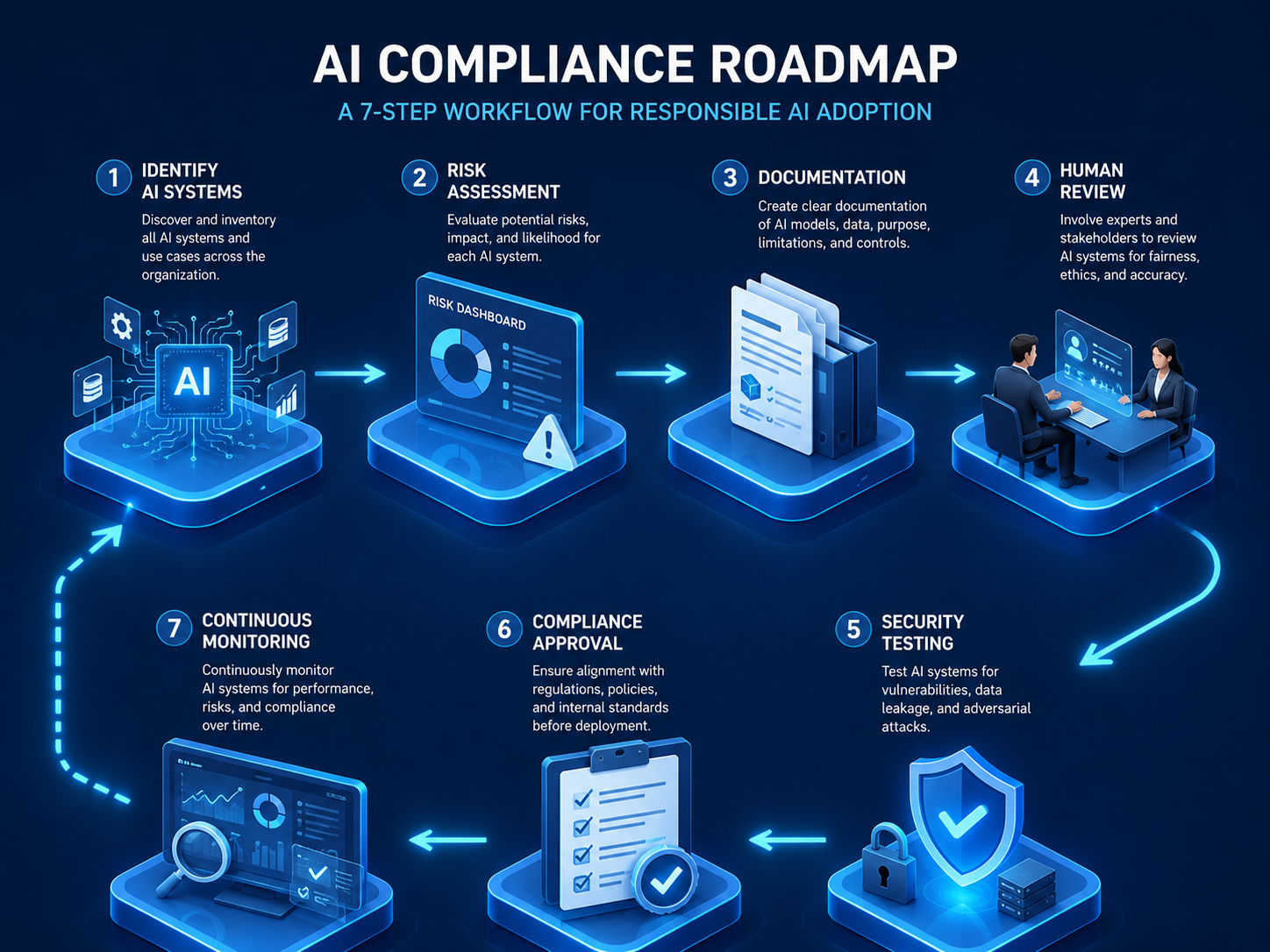
Companies should prepare for AI compliance by inventorying every AI system in use, classifying each by risk level, and documenting decision-making processes before a regulator asks for it. Start with a full map, including third-party vendor tools—those often carry hidden obligations nobody thought to check.
A mid-sized retailer using AI for inventory forecasting and customer-facing chatbots should treat those two very differently. The forecasting tool is probably low-risk; the chatbot handling complaints might need transparency disclosures depending on jurisdiction. It also helps to designate one clear owner for AI governance—whether that’s a compliance officer or a small cross-functional group—so nobody’s scrambling when a new rule lands.
What’s Next for Global AI Regulation?
Expect more fragmentation before any real convergence. More countries are passing AI-specific laws that don’t yet talk to each other, and full international harmonization is still years off, if it happens at all.
That said, there’s real dialogue happening between the EU, US, and UK on shared AI safety standards, which suggests some eventual alignment around common testing benchmarks—even if it’s slow going. Regulatory attention is also shifting toward foundation models specifically, since their downstream impact touches so many applications at once. If you’re trying to plan ahead, watching what happens with foundation-model-specific rules is probably a better signal than watching any single country’s headline law.
Conclusion
Governments are regulating AI because the risks—safety failures, bias, job losses, misinformation, security exposure—got too large to leave unaddressed, not because anyone’s trying to slam the brakes on innovation. The EU, US, and China each reflect a different philosophy, but the underlying goal lines up: make sure a powerful technology serves people instead of quietly working against them. If you’re running a business, building AI products, or just trying to keep up with the news, understanding these drivers puts you ahead of a regulatory landscape that shows no sign of slowing down.
Frequently Asked Questions
FAQ 1: Is AI regulation the same in every country?
No, and this is probably the biggest misconception people have. The EU treats AI regulation as a comprehensive legal framework tied to risk tiers, the US handles it through a mix of state laws and agency guidance without one unifying statute, and China folds it into a broader system of state control over content and infrastructure. If you’re running a business across multiple regions, assuming one country’s rules apply everywhere is a mistake I’ve seen trip up otherwise sharp compliance teams.
FAQ 2: Does AI regulation slow down innovation?
This is genuinely debated, and honestly, the answer depends on which part of the AI stack you’re looking at. Research and low-risk applications generally aren’t affected much—nobody’s regulating spam filters. But high-risk deployments (hiring, lending, healthcare) do face real friction: testing requirements, documentation, longer approval timelines. Some companies see that as a cost; others see it as a forcing function that catches problems before they become PR disasters or lawsuits. Both views have merit, and it really depends on your risk tolerance.
FAQ 3: Will small businesses be affected by AI regulation, or is this just a big-tech problem?
Small businesses aren’t off the hook, and that’s worth being upfront about. If you’re using a third-party AI tool for hiring, lending, or customer decisions, you’re generally still responsible for how it performs—even if you didn’t build it. The compliance burden is usually lighter for low-risk use cases, but if you’re deploying anything in a high-risk category, size doesn’t exempt you from documentation and testing obligations.
FAQ 4: How can I tell if an AI tool my company uses falls under strict regulation?
The simplest gut check: ask what happens if the system gets it wrong. If a bad output could affect someone’s job, credit, health, or legal standing, it’s probably heading toward high-risk classification under most current frameworks. If the worst case is a mildly annoying customer experience, it’s likely low-risk. When in doubt, it’s worth running the tool through a formal risk assessment rather than guessing.
FAQ 5: Are there any global standards for AI regulation, or is it all fragmented?
Right now, it’s mostly fragmented, though that’s shifting slowly. Organizations like the OECD have pushed governance frameworks that member countries reference, and there’s active dialogue between the EU, US, and UK on shared safety benchmarks for AI models. But a single, binding international AI law doesn’t exist yet, and given how differently the EU, US, and China approach this, full harmonization is unlikely anytime soon.
FAQ 6: What happens if a company ignores AI regulation entirely?
Depends heavily on jurisdiction, but the consequences are becoming real rather than theoretical. Under the EU AI Act, penalties for non-compliance with high-risk system requirements can be substantial—comparable in structure to GDPR-style fines tied to global revenue. In the US, enforcement tends to come through existing consumer protection or anti-discrimination law rather than an AI-specific penalty, but the legal exposure is just as real if an algorithm produces discriminatory outcomes. Ignoring the rules isn’t really a strategy at this point—it’s a liability waiting to surface.
Written by Jordan Collins: Jordan Collins is a technology writer covering emerging technologies, digital innovation, and technology trends. His work focuses on explaining complex technology topics in a clear, accessible way to help readers better understand the rapidly evolving digital landscape.
Reviewed by: Editorial Review Team & Technology Content Specialists.
Disclaimer: This article is based on publicly available research, government publications, regulatory announcements, industry reports, and technology news available at the time of publication. Artificial intelligence regulations, legal frameworks, and government policies continue to evolve across different countries and jurisdictions. Readers are encouraged to verify the latest legislative updates, official guidance, and regulatory developments before relying on this information for legal, business, or compliance-related decisions. This content was initially drafted with AI assistance and has been carefully reviewed, edited, refined, and fact-checked by human editors to ensure accuracy, clarity, originality, and editorial quality.