By Nathan Cole, Digital Culture Analyst — Specializing in AI-generated personalities, creator economics, and social media growth systems.
Summarize this blog post with: ChatGPT | Perplexity | Claude | Grok
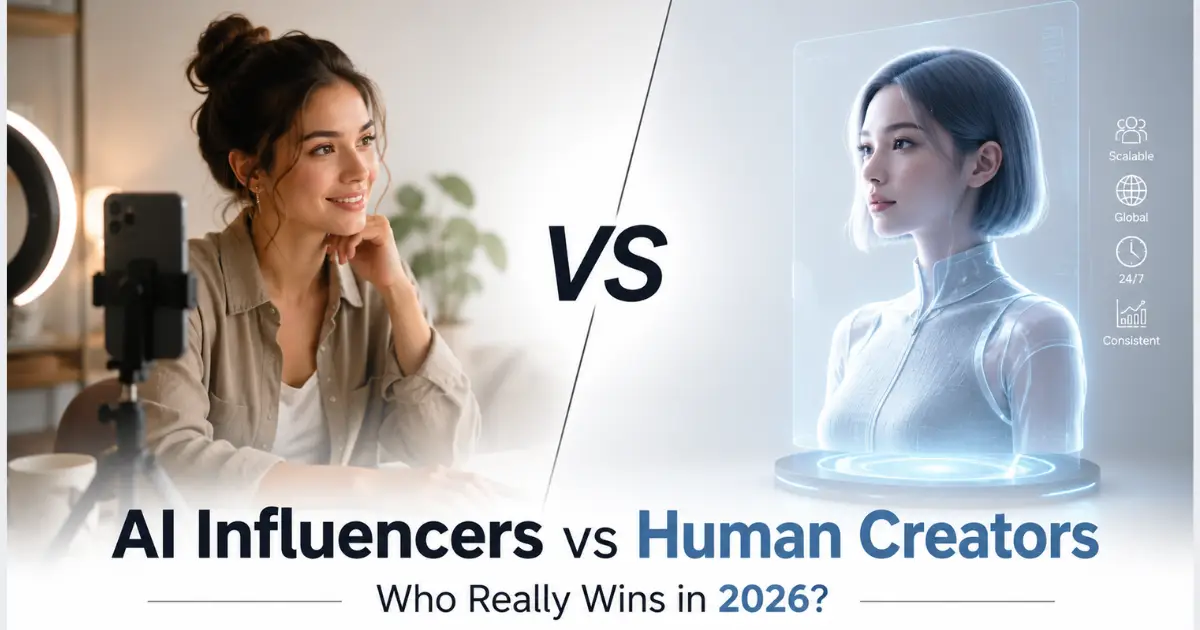
You already know influencer marketing works. Billions in brand deals, millions of engaged followers, entire careers built on the back of a smartphone camera — the proof is everywhere. But here’s the thing most marketers haven’t fully confronted yet: some of those “influencers” aren’t human anymore. And the ones that aren’t? They’re getting really, really convincing.
The debate between AI influencers and human creators isn’t just a tech curiosity at this point. It’s a real budget decision. A real strategic fork in the road. And the wrong call could mean wasting a significant chunk of your campaign spend on the wrong type of creator for what you’re actually trying to accomplish.
In this guide, you’ll get a genuinely balanced breakdown — not a hot take, not AI hype, not a “humans will always win” defense piece. Just a clear look at where each type of creator actually performs, where they fall short, and how the smartest brands are thinking about this in 2026.
Key Takeaways
- AI influencers are computer-generated digital personas built using CGI, generative AI, and scripted persona management — they’re fully controllable, but that control comes at the cost of genuine emotional connection.
- Human creators have a trust advantage that’s genuinely hard to replicate — audiences form emotional bonds with real people, and that translates directly into higher conversion rates and longer-term brand loyalty.
- The cost models are completely different — AI influencers cost more upfront but scale at near-zero marginal cost per post; human creators charge per deliverable, which adds up fast across platforms and markets.
- Neither type universally wins — the right choice depends on your campaign goal, product category, audience expectations, and how much creative control you need.
- Hybrid strategies are becoming the norm in 2026 — brands increasingly use AI influencers for top-of-funnel awareness and human creators for the trust-heavy, conversion-focused work lower in the funnel.
- Disclosure isn’t optional anymore — the FTC and major platforms are actively enforcing AI content labeling, and audiences are getting better at spotting synthetic content whether it’s labeled or not.
- Smart human creators are already using AI tools to scale output, and the ones who do it without losing their authentic voice are pulling ahead fast.
What Are AI Influencers, Really?
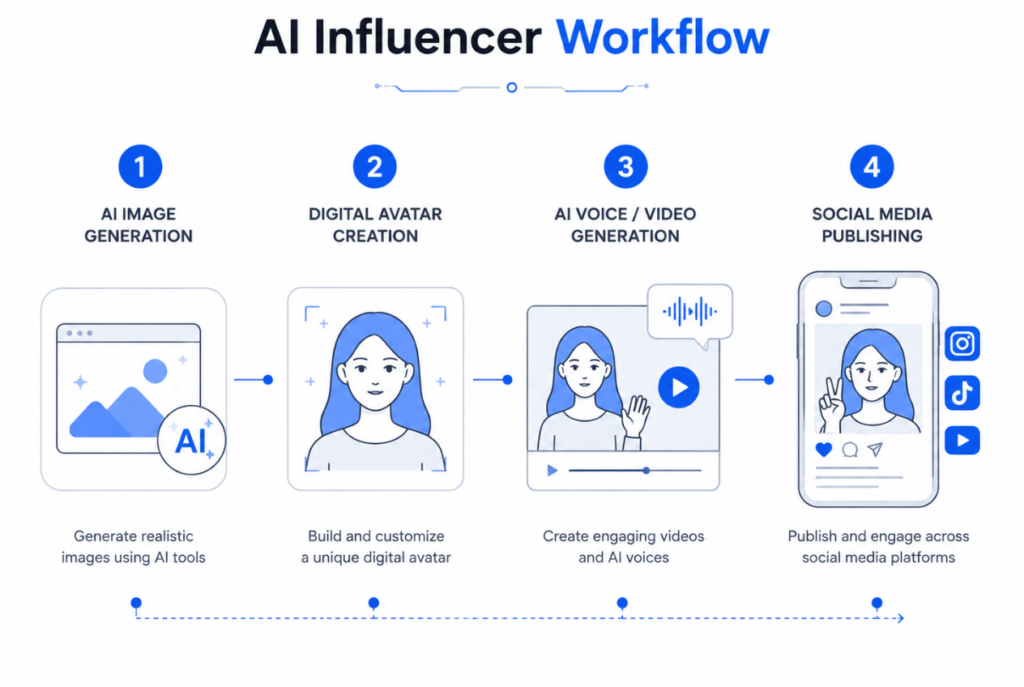
An AI influencer is a computer-generated digital persona — typically built using CGI, generative AI image tools, or a combination of both — that operates on social media platforms to promote brands and engage audiences without being a real human being. They post. They respond to comments (sort of). They have “opinions” about fashion, travel, and skincare. They just don’t exist.
What makes them genuinely interesting isn’t the technology itself — it’s how convincing that technology has become. From what I’ve seen over the past few years, the gap between a well-produced AI influencer and a human creator has collapsed dramatically. And in 2026, it’s getting harder to tell the difference without context.
How AI Influencers Are Actually Built
Most AI influencers come to life through one of three main approaches, sometimes in combination.
3D CGI modeling is the premium route — the same kind of technology used in film production creates a photorealistic digital human with a consistent face, body language, wardrobe, and visual identity. It’s expensive upfront, but the asset is owned outright and can be used indefinitely.
Generative AI tools — Midjourney, Flux, Stable Diffusion, and others — let brands produce new images of their virtual persona in any setting, wearing any outfit, in any location, from a text prompt. What took a CGI studio weeks to render in 2020 takes about 20 minutes now.
Scripted persona management is the often-overlooked third piece. Behind every AI influencer is usually a team of writers, designers, and strategists who shape the character’s personality, craft their posts, and decide what opinions they hold. The “AI” part handles the visuals. The humans behind the curtain handle the narrative.
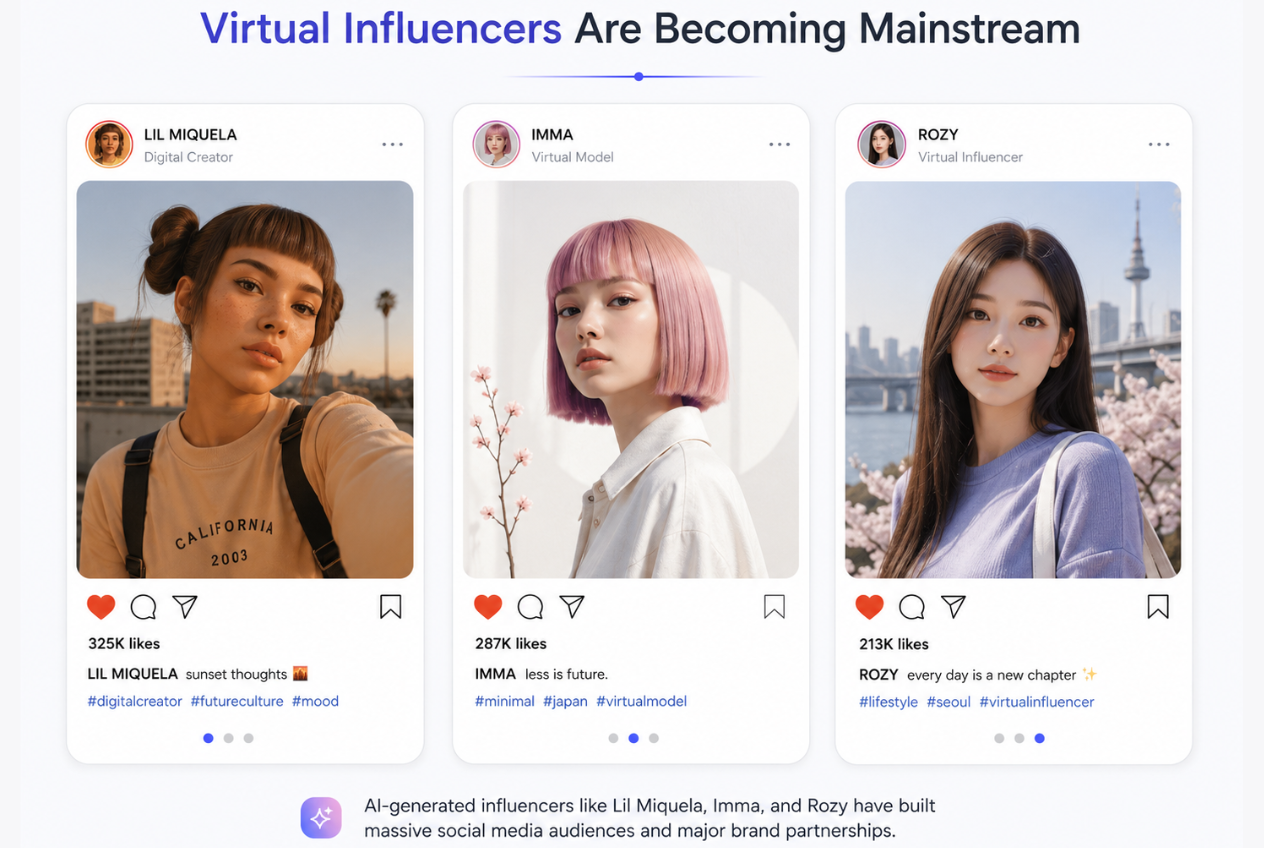
The most famous examples are worth knowing: Lil Miquela built a following of over 3 million on Instagram and landed brand deals with Prada, Calvin Klein, and Samsung. Imma, the Japanese virtual model, has become a legitimate fashion figure. Noonoouri has worked with Dior. Rozy — South Korea’s first virtual human — became a brand ambassador for Shinhan Life Insurance. These aren’t experiments anymore. They’re commercial assets that are earning real money.
Why This Debate Actually Matters Right Now
Honestly, a year or two ago this conversation felt a little abstract — like something happening at the edge of the industry that most brands didn’t need to think about yet. That’s changed.
The global influencer marketing industry was valued at over $24 billion in 2024 and is projected to keep growing through 2026 according to influencer marketing industry benchmark data from Influencer Marketing Hub — one of the most comprehensive annual reports tracking this space — Source: Influencer Marketing Hub, 2026. At that scale, even a modest budget misallocation — say, choosing the wrong creator type for the wrong campaign objective — translates into real money wasted. And generative AI has made virtual influencers accessible to brands that couldn’t have considered them two years ago. The upfront costs have dropped significantly.
At the same time, audiences are getting more skeptical. According to the 2024 Edelman Trust Barometer, 61% of consumers say they distrust branded social media content unless it comes from a source they personally follow — Source: Edelman Trust Barometer, 2024. That trust deficit is precisely why choosing between an AI influencer and a human creator is now a strategic decision, not just a preference.
India’s creator economy alone has grown to an estimated 3.5 to 4.5 million active creators powering a ₹3,500 crore influencer industry, with projections pointing toward ₹5,000 crore by 2027 — Source: Kofluence Report, 2025. The scale of what’s happening globally makes this conversation unavoidable for any brand with a serious social media presence.
Who Are Human Creators and What Actually Makes Them Powerful?
Human creators are real people who build audiences through authentic storytelling, lived experience, niche expertise, and genuine community. That might sound obvious, but it’s worth stating clearly because their power doesn’t come from production quality or visual consistency — it comes from emotional credibility.
When a human creator recommends something, it lands differently than a sponsored post from a CGI persona. The implicit message is: “I actually use this. I actually think this is worth your time.” That’s hard to fake, and audiences have finely tuned radar for when it is being faked.
Human creators outperform AI influencers in audience trust and conversion because followers form emotional bonds with real people — a psychological dynamic that synthetic personas genuinely cannot replicate at scale, at least not yet.
The Creator Spectrum: From Nano to Mega
Not all human creators are the same, and understanding the spectrum matters when you’re deciding who to work with.
Nano-influencers (roughly 1K–10K followers) consistently drive the highest engagement rates — often 4–8% — because their audiences are small, tight-knit communities where people actually know each other. Micro-influencers (10K–100K) combine meaningful reach with above-average trust. Macro-influencers (100K–1M) offer real scale, but engagement rates tend to drop. Mega-influencers (1M+) are essentially media buys at this point — the reach is there, but the authenticity often isn’t.
How Human Creators Make Money (And Why It Matters for Brands)
Human creators earn through brand deals, affiliate commissions, platform revenue sharing (YouTube AdSense, TikTok Creativity Program, Instagram Bonuses), digital products, paid memberships, and live events. That income diversity makes them resilient — but it also means their time and attention are spread across multiple partners.
Understanding brand deal negotiation for influencers can help brands structure partnerships that genuinely motivate creative effort rather than producing content that feels like a checkbox.
AI Influencers vs. Human Creators: The 5-Dimension Breakdown
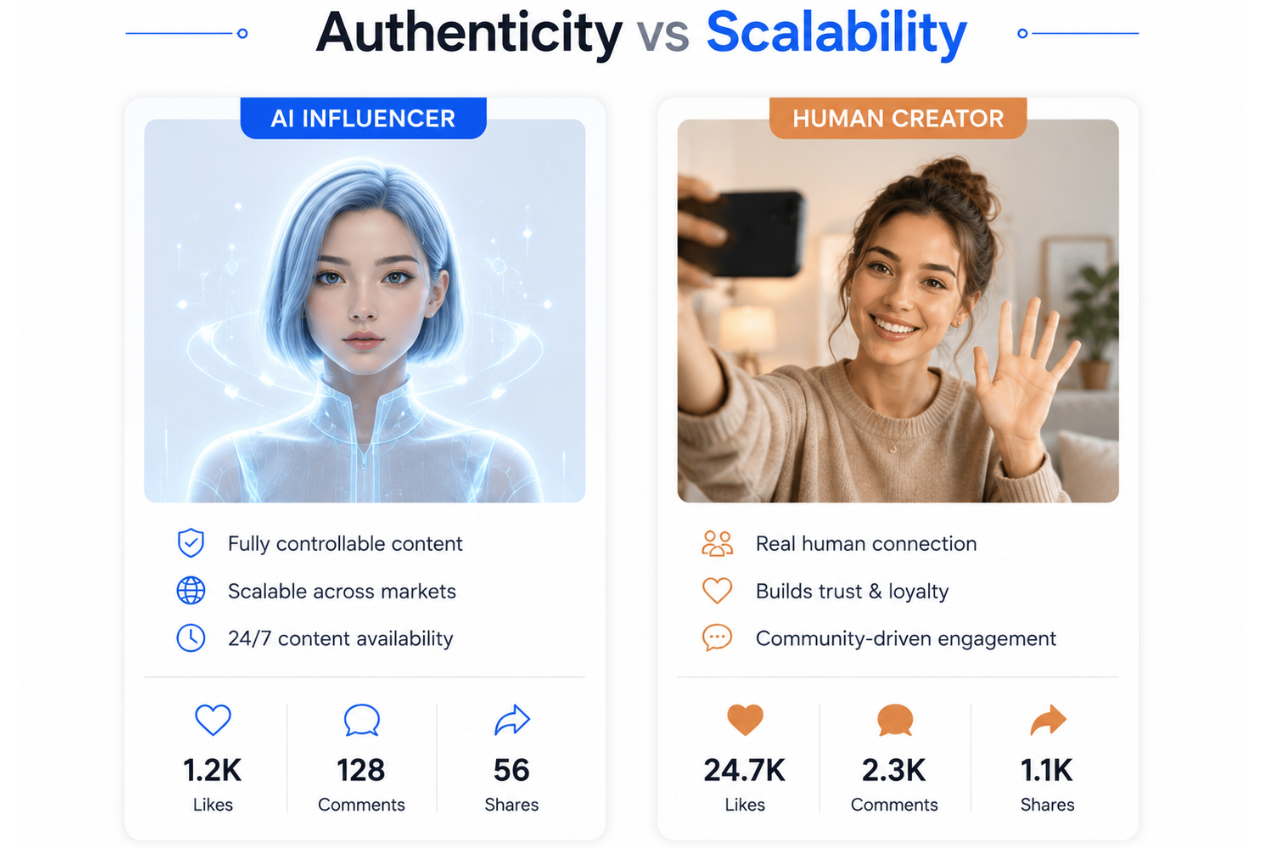
Here’s where things get genuinely interesting, and where most comparison articles get lazy by just declaring a winner. So let me be clear upfront: choosing between an AI influencer and a human creator depends entirely on what you’re trying to accomplish. AI influencers offer brand control and scalability; human creators deliver authenticity and community-driven trust. The “winner” changes based on the campaign.
| Dimension | AI Influencers | Human Creators |
|---|---|---|
| Authenticity & Trust | Consistent but emotionally hollow | Genuine emotional connection |
| Cost & Scalability | High setup, near-zero per-post | Per-deliverable pricing adds up |
| Brand Control | Total control | Creative autonomy required |
| Audience Engagement | Curiosity-driven, lower conversion | Community-driven, higher conversion |
| Longevity & Risk | Ethical/disclosure risk | Burnout and controversy risk |
Authenticity & Trust: The Emotional Credibility Gap
Authenticity is — and honestly probably will remain for a while — the single biggest competitive advantage human creators hold. Audiences build what psychologists call parasocial relationships with human creators. They follow someone’s divorce, their fitness transformation, their job loss, their new puppy. When that person recommends a product, it feels like advice from someone they know.
AI influencers win on scandal-free consistency, which is genuinely valuable. Human creators can go off-script, get cancelled, or have a bad week that tanks a campaign. An AI influencer will never post something regrettable at midnight or make an off-brand comment in a livestream. For brands navigating audience trust and brand authenticity, the question is really about which risk profile your brand can better manage.
Cost & Scalability: The Economics Are More Complicated Than They Appear
AI influencers carry significant upfront development costs — building a fully realized CGI persona typically runs anywhere from $10,000 to well over $100,000 depending on production quality. But after that initial investment, the marginal cost per post is near zero. A brand that owns its AI influencer can publish across five languages, twenty markets, and dozens of formats without paying per deliverable.
Human creators charge per post, per video, per story. A mid-tier macro-influencer commonly charges between $5,000 and $25,000 per sponsored post — Source: CreatorIQ Industry Report, 2024. That compounds fast across multiple platforms and campaign runs.
If you’re already thinking about the broader cost comparison between automated systems and human talent, our AI agents vs. human freelancers cost breakdown goes deep on the real numbers.
That said — and this is important — influencer marketing ROI benchmarks consistently show that human creators, especially micro-influencers, deliver higher return per dollar for conversion-focused campaigns. The cost efficiency of AI influencers is primarily a volume play, not a conversion play.
Brand Control: Owning the Message vs. Earning Credibility
With AI influencers, the brand is the creative director. Every word, every pose, every product placement is deliberate. There’s no “creative interpretation.” For highly regulated industries — pharmaceuticals, financial services, healthcare — that level of control isn’t a preference, it’s a compliance requirement.
Human creators bring their voice, and their voice is the whole point. Over-scripting a human creator produces exactly the kind of stilted, unconvincing content that audiences recognize instantly. The best brand-creator partnerships give creators genuine creative latitude. That means accepting some loss of control in exchange for content that actually resonates.
Audience Engagement: Depth vs. Curiosity
From what I’ve seen in how audiences interact with AI vs. human content, the difference in comment quality is striking. Comments on human creator posts are actual conversations — people sharing experiences, asking follow-up questions, recommending to friends. Comments on AI influencer posts are frequently meta — “Wait, is she even real?” — which drives engagement metrics but doesn’t translate into purchase behavior.
Data from Nielsen consistently shows user-generated content and peer recommendations convert at 3–5x the rate of branded content, including AI-generated influencer posts — Source: Nielsen Consumer Trust Report, 2023. That gap matters at the bottom of the funnel.
Longevity & Risk: Two Very Different Ways to Fail
Human creators face burnout and controversy — over 70% of full-time creators report experiencing significant burnout — Source: ConvertKit State of the Creator Economy, 2024. One viral controversy can end a multi-year brand relationship overnight.
AI influencers face a different kind of risk: ethical backlash and audience fatigue when the synthetic nature is not disclosed. Undisclosed AI personas — especially in emotionally sensitive categories like health, relationships, or personal finance — are generating increasingly strong negative reactions. The disclosure conversation in 2026 is not optional.
When Should Brands Choose AI Influencers?
AI influencers make strategic sense in specific, well-defined scenarios. They’re not a universal replacement for human talent, but they are genuinely the better choice when:
- Visual and brand consistency is non-negotiable at scale — luxury and fashion brands maintaining precise aesthetic standards across 50+ markets
- 24/7 global content output is a real requirement — simultaneous product launches in multiple languages without scheduling bottlenecks
- Owning the influencer IP outright matters strategically — building a long-term brand mascot rather than renting someone else’s audience
- Controversy risk needs to be eliminated entirely — regulated industries or brands recovering from recent reputational issues
Samsung Korea’s campaign with virtual influencer Rozy is probably the most cited clean example here — a scandal-free, fully controllable Gen Z-targeted persona that delivered consistent messaging across digital channels without a single human variable to manage.
Virtual influencers collectively earned an estimated $500 million in Q3 2025 alone, which tells you this is not a fringe experiment — Source: Base.Tube, 2025.
When Should Brands Choose Human Creators?
Human creators are genuinely irreplaceable when authenticity and community trust are the campaign’s primary currency. Choose human creators when:
- The product requires real-world testimony — health, fitness, food, parenting, personal finance — categories where “I actually tried this” is the entire value proposition
- Niche community targeting is the goal — a human creator with 12,000 highly engaged followers in home fermentation is more valuable to a specialty food brand than an AI influencer with 2 million passive scroll-throughs
- Long-term brand relationships matter — repeat partnerships with the same creator start to feel like genuine endorsements rather than paid placements
- The storytelling requires lived experience — content that only a real person who has actually been through something can credibly tell
Even mainstream fashion media is grappling with this shift — Vogue’s analysis of AI’s impact on the creator economy found that most brands still hesitate to rely entirely on virtual influencers precisely because trust and credibility remain difficult to automate.
What Tools Are Brands Actually Using?
The tooling ecosystem has expanded significantly. Here’s what brands are working with in practice.
AI Influencer Creation and Management
- Synthesia — AI video generation with customizable avatars; strong for scalable talking-head content
- HeyGen — Realistic AI spokesperson videos with multilingual voice cloning; particularly useful for global campaigns
- DeepBrain AI — Conversational AI humans for more interactive brand touchpoints
- Rosebud AI — Character and avatar creation for social-native AI personalities
- Superplastic — Premium CGI character studio for brands that want luxury-tier virtual personas
Human Creator Platforms
For brands managing human creator partnerships, top influencer marketing platforms for brands include:
- Grin — End-to-end creator relationship management; built for mid-to-large brand teams
- Upfluence — Data-driven creator discovery with deep analytics; good for performance-focused campaigns
- AspireIQ — Community-focused; works well for brand ambassador programs built for the long term
- LTK (LikeToKnowIt) — Shopping-native platform; ideal for lifestyle and fashion brands
- Collabstr — Self-serve marketplace; useful for fast, transactional creator partnerships
Tools That Help Human Creators Use AI
This is the category I think gets underestimated. For AI tools for content creators, the most interesting space right now is human creators augmenting their output with AI — not replacing themselves, but using AI to handle the repetitive parts of production. AI scriptwriting (Jasper, Copy.ai), AI image editing (Adobe Firefly, Canva AI), AI video clipping (Opus Clip, Descript), and A/B testing tools (VidIQ, Neurons) are all becoming standard parts of the creator workflow. If you want a vetted list of tools that go beyond the basics, we’ve tested and ranked the AI productivity tools that actually fit into a real workflow — worth bookmarking alongside this guide.
Is a Hybrid Strategy Actually the Future? (From What I’ve Seen, Yes)
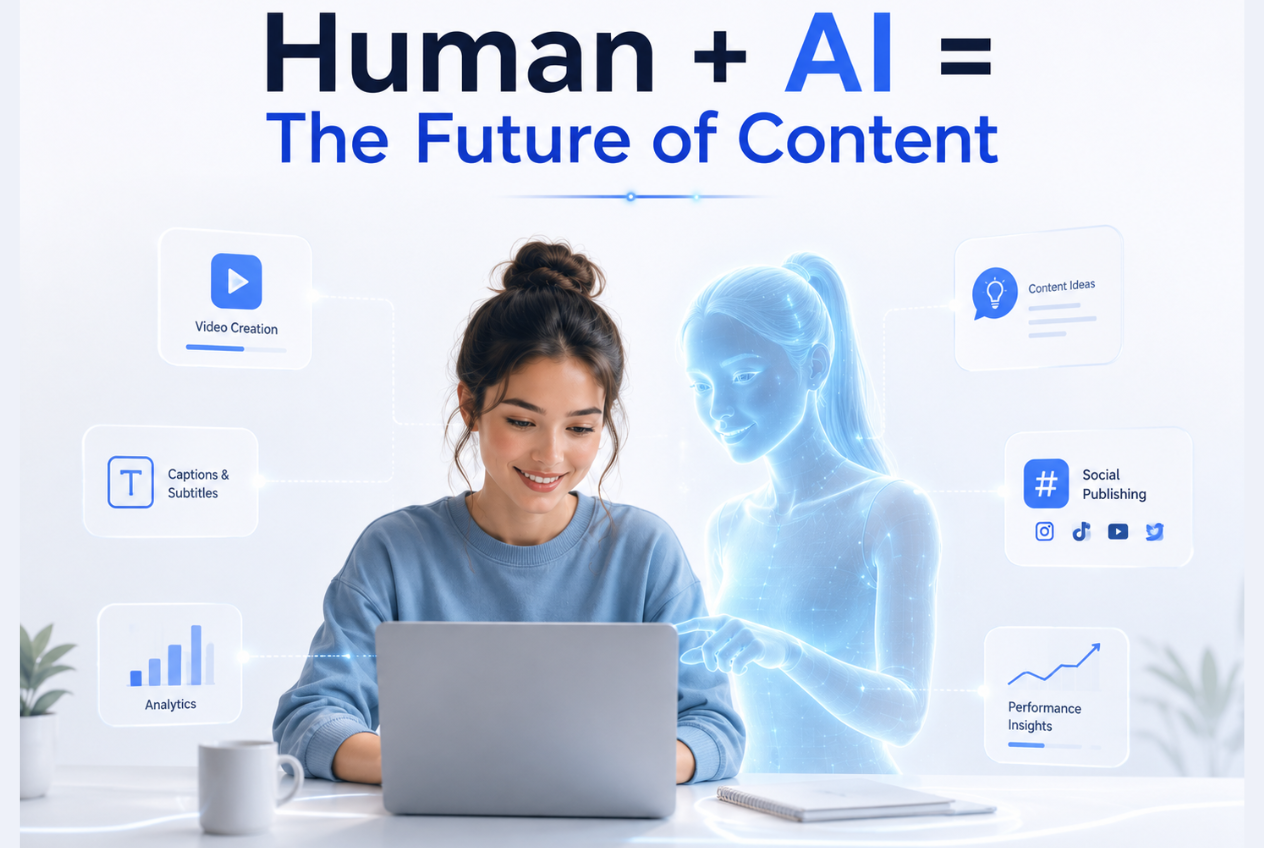
Here’s the honest answer: the most effective influencer strategies in 2026 are hybrid. The brands figuring this out are using AI influencers for top-of-funnel brand awareness — high-volume, visually consistent, globally scalable content — and human creators for the trust-heavy, community-driven, conversion-focused work that happens further down the funnel.
The logic is clean once you see it. AI influencers own the top of the funnel. They introduce products, establish aesthetics, maintain platform presence around the clock, and can localize content instantly. Human creators own the middle and bottom of the funnel. They answer real questions, share genuine experiences, build community, and drive the last-mile purchase decision that no AI persona has yet convincingly managed at scale.
f you’re curious about what a fully automated AI content system actually looks like in practice, we’ve documented an end-to-end case study that’s worth reading alongside this comparison.
Here’s a practical decision framework:
| Campaign Goal | Recommended Creator Type |
|---|---|
| Global brand awareness | AI Influencer |
| High-volume product launch content | AI Influencer |
| Trust-based product endorsement | Human Creator |
| Niche community engagement | Human Creator |
| Multilingual content localization | AI Influencer |
| Long-term brand ambassador program | Human Creator (AI-assisted) |
| Conversion-focused campaign | Human Creator |
| Visual consistency across markets | AI Influencer |
For building a social media content strategy for brands that incorporates both approaches, this framework is a good starting point.
What’s Coming Next for AI and Human Creators?
The creator economy isn’t splitting into two opposing camps. It’s merging into a single hybrid ecosystem — and three things are going to shape how it evolves from here.
Regulation is accelerating. The FTC’s guidance on AI-generated personas used for commercial promotion is clear: disclosure is required. FTC influencer disclosure guidelines are being enforced more actively, platforms like Instagram and TikTok are introducing mandatory AI content labels, and treating non-disclosure as deceptive advertising is becoming standard practice. This isn’t changing — it’s intensifying.
Audience literacy is rising faster than most brands expect. Gen Z and Gen Alpha consumers are developing a genuine ability to identify synthetic content. And they’re not uniformly hostile to AI influencers — but they’re deeply hostile to being deceived by them. Brands that lead with transparency (“Meet Aria, our AI brand ambassador”) consistently outperform brands that obscure it. Authenticity isn’t just an emotional preference anymore — it’s a trust signal with commercial consequences.
Human creators who embrace AI are pulling ahead. The creators who are going to dominate the next five years aren’t the ones resisting AI — they’re the ones using it to produce more content, reach more platforms, and free up their time for the genuine human connection that remains their irreplaceable competitive edge.
For a grounded look at the realistic ways creators are monetizing AI in 2026 — including what actually works versus what’s mostly hype — that guide is a solid next read.
Conclusion: There’s No Universal Winner — And That’s Actually Good News
The question “AI influencers vs. human creators — who wins?” has a genuinely unsatisfying answer: it depends. But that’s not a cop-out. It’s actually the most useful thing I can tell you.
AI influencers are brand assets. They offer control, consistency, global scalability, and a risk profile free of human unpredictability. Human creators are trust assets. They offer emotional credibility, real community, and the conversion power that only authentic endorsement from a real person can generate. Neither is universally better. They serve different strategic functions, and the brands that understand that distinction are the ones spending their campaign budgets more intelligently.
The future of creator marketing isn’t human or AI. It’s human and AI — and getting that combination right is the actual competitive advantage.
Frequently Asked Questions
Are AI influencers legally required to disclose that they’re not human?
In most major markets, yes — and enforcement is getting stricter. In the United States, the FTC requires that AI-generated personas used for commercial promotion be clearly disclosed. The EU’s Digital Services Act and similar regulations in the UK and Australia have comparable requirements. In 2026, major platforms including Instagram, TikTok, and YouTube have also introduced their own mandatory AI content labeling policies. Brands that fail to disclose are increasingly treated as engaging in deceptive advertising, which carries real legal and reputational risk.
Can AI influencers actually drive product sales, or are they just a novelty?
They can — but it depends heavily on what you’re selling and to whom. AI influencers tend to drive stronger results in visually driven categories like fashion, beauty, gaming, and tech accessories, where the product experience can be communicated through aesthetics rather than personal testimony. In categories that require trust and lived experience — health products, financial services, parenting — human creators still significantly outperform AI personas in conversion. Virtual influencers collectively earned an estimated $500 million in Q3 2025 alone, so the commercial potential is clearly real — Source: Base.Tube, 2025.
How much does it actually cost to create an AI influencer?
It varies a lot depending on the quality tier you’re targeting. A basic AI influencer built using generative AI tools (Midjourney, Flux) with a scripted persona and social media management can be launched for a few thousand dollars. A premium CGI persona with professional character design, video capability, and a full brand identity typically costs between $50,000 and $200,000 or more upfront. The key financial difference versus human creators is that after the initial investment, the marginal cost per post is near zero — making AI influencers increasingly cost-effective over time for brands with consistent, high-volume content needs.
Will AI influencers eventually replace human creators entirely?
Honestly, this feels increasingly unlikely — and not just for sentimental reasons. Human creators provide something genuinely difficult to automate: emotional credibility rooted in real experience. Audiences form parasocial relationships with real people because they sense the stakes are real. An AI influencer can simulate a skincare routine but can’t genuinely experience acne. A virtual persona can “travel” anywhere but can’t share what it actually felt like to get lost in a new city. The more likely future is a hybrid ecosystem where human creators use AI tools to scale their output, and AI influencers handle the high-volume, visually consistent work that doesn’t require emotional authenticity to be effective.
How do I know if a hybrid strategy is right for my brand?
A hybrid approach makes sense for most brands with more than one campaign objective running simultaneously. The simplest way to think about it: if you need high-volume, globally consistent brand awareness content, AI influencers handle that efficiently. If you need trust, community engagement, or conversion — especially in a category where personal testimony matters — human creators are the right choice. A brand launching a new product globally might use an AI influencer to saturate awareness across markets while simultaneously partnering with niche human creators in each region to build local credibility and drive purchase decisions.
What’s the biggest mistake brands make when working with AI influencers?
Not disclosing. It sounds obvious, but the temptation to let audiences assume they’re engaging with a human persona is real — and it consistently backfires. When audiences discover they’ve been deceived (and they increasingly do discover it), the brand damage is significantly worse than any awareness benefit the AI influencer delivered. Transparency isn’t just an ethical obligation in 2026 — it’s a strategic one. Brands that frame their AI influencers as innovative, futuristic brand assets tend to generate curiosity and interest rather than backlash.
Written by Nathan Cole: Nathan Cole is a digital culture analyst with expertise in AI-generated personalities, social media growth systems, and modern creator economics. His work focuses on analyzing how artificial intelligence is reshaping online influence, audience engagement, brand partnerships, and the future of digital content creation.
Reviewed by: Subject Matter Experts & Digital Media Strategy Specialists.
Disclaimer: This article is based on industry research, trend analysis, and real-world observations from the evolving creator economy and AI media landscape. The capabilities, popularity, and monetization potential of AI-generated influencers and creator platforms may change rapidly over time. Readers are encouraged to independently verify current platform policies, technology updates, and market conditions before making business or content strategy decisions. This content was initially drafted with AI assistance and has been carefully reviewed, refined, and fact-checked by human editors and subject matter experts to ensure accuracy, clarity, originality, and editorial integrity.