By Caleb Morgan | Technology and Digital Culture Content Writer
Summarize this blog post with: ChatGPT | Perplexity | Claude | Grok
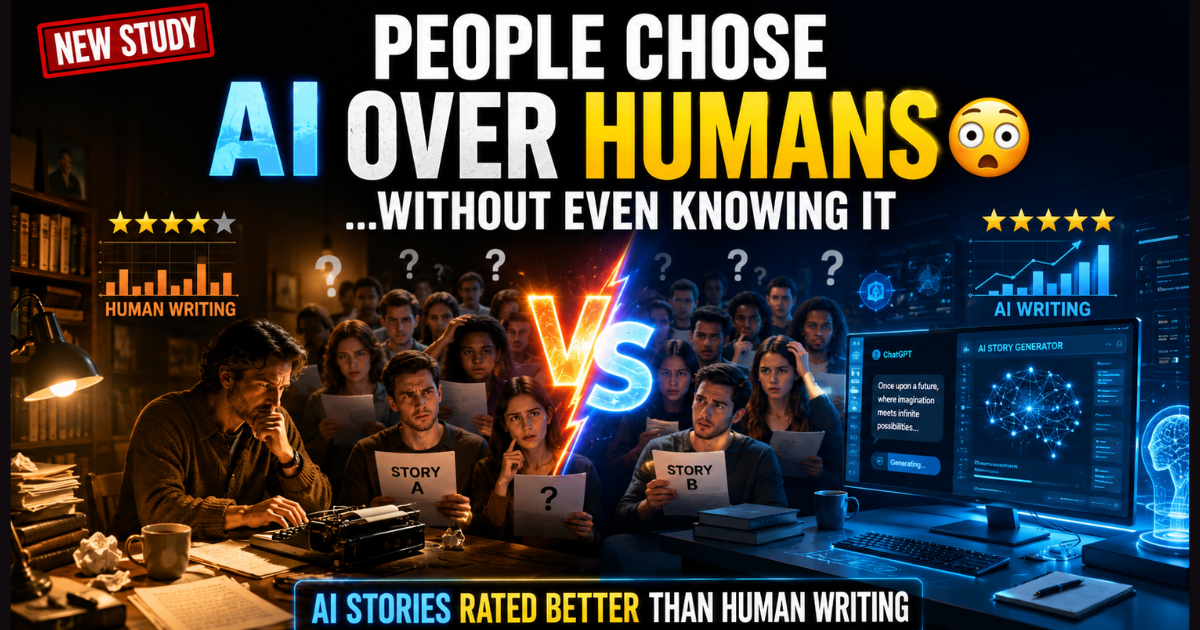
You’ve probably assumed, like most of us, that a human writer will always beat a machine at telling a genuinely good story. Turns out that’s not quite true anymore — and the gap in how we think we’d react versus how we actually react is bigger than anyone expected. In this piece, I’ll walk through what a recent Villanova University study found, how it was tested, why the results feel a little uncomfortable, and what they actually mean if you write, publish, or just read for a living.
Key Takeaways
- A Villanova University study found that AI-generated short stories were rated higher in quality and reader engagement than comparable human-written stories.
- Participants correctly identified whether a story was AI-written or human-written only about 40% to 52% of the time — essentially a coin flip.
- Stories rated highest of all were the ones written by AI but mistakenly labeled as human-written, which points to a real bias tied to perceived authorship rather than actual writing quality.
- The study paired three published literary short stories with three thematically matched ChatGPT-generated stories and tested nearly 2,600 participants across three separate experiments.
- Other research on AI content shows a messier picture — some studies find that once people know something is AI-written, their trust and immersion drop, regardless of quality.
- None of this proves AI is more “creative” than people — it proves that readers judge writing based on more than the words on the page.
What Is the AI vs. Human Storytelling Study, Exactly?
The AI vs. human storytelling study is a set of experiments out of Villanova University that compared how readers rated AI-generated short stories against human-written ones, both with and without knowing who actually wrote them. Dr. Deena Weisberg, a psychology researcher at Villanova, led the work, and it was published in the journal Judgment and Decision Making. For readers who want the full research write-up straight from the source, Villanova University’s own summary of the findings includes direct quotes from Dr. Weisberg on what the bias actually reveals about our assumptions.
Here’s how they set it up: the team picked three short stories written by human authors and published in real literary journals or collections. Then they had ChatGPT generate three more stories on similar themes — so a story about grief and memory got matched with an AI story tackling roughly the same emotional territory. That pairing matters. It meant the researchers weren’t comparing, say, a quiet character study against a plot-heavy thriller and calling it a fair fight. They were comparing like with like.
From a research design standpoint, this is a smart move. A lot of the “AI can’t write” or “AI writes great fiction” takes floating around online are based on cherry-picked, unmatched examples — which tells you almost nothing. Pairing stories by theme is one of the reasons this study is worth taking seriously instead of dismissing as another AI headline.
Why This Study Actually Matters
Honestly, storytelling has always felt like one of the last strongholds where people assumed AI just couldn’t compete. Coding, summarizing, drafting emails — sure, fine, let the machine do it. But fiction? That felt personal, almost sacred, tied to lived experience in a way a language model shouldn’t be able to fake.
This study pokes a pretty big hole in that assumption. If regular readers genuinely can’t tell AI writing from human writing in a blind test — and, worse, sometimes prefer it — that has real consequences for publishing houses, content platforms, writing programs, and anyone whose livelihood depends on the idea that human-made fiction is inherently more valuable.
There’s also a trust angle here. As AI tools get folded into more of what we read every day — from blog posts to short fiction to marketing copy — understanding how people actually respond to that content, rather than how they say they’ll respond when asked directly, matters a lot for decisions around disclosure and labeling. That gap between stated preference and blind-test behavior is really the heart of this whole story.
How Was the Study Actually Conducted?

The researchers ran three separate experiments, and the setup changed a bit each time, which is part of why the findings hold up reasonably well.
In the first experiment, 1,682 participants each read one story. They were told it was either human-written or AI-written — but that label wasn’t always accurate. Some people reading an actually-AI story were told it was human-written, and vice versa. Afterward, they rated the story on quality and how engaging it was.
In the second and third experiments, the researchers dropped the labeling entirely. Participants — 424 in the second round, 481 in the third — read one human story and one AI story back-to-back, with no information about which was which. This is the “blind taste test” version of the study, and it’s the part that really tests raw writing quality without any authorship bias sneaking in.
Across all three experiments, people rated stories on quality (how well-written it felt) and absorption (how invested they got in reading it). Running both a labeled and a blind version in the same study is what gives this research some real teeth — it lets you separate “does AI write well” from “do people like being told something is AI-written,” which are two very different questions.
What Did the Study Actually Find?
Across the board, AI-generated stories scored higher than human-written ones on both quality and absorption. According to reporting on the research, AI stories came in roughly 6% higher on quality and 8% higher on engagement — Source: TIME, 2026. That alone challenges a pretty deep-seated assumption a lot of us walk around with.
Here’s the part that really stings, though: AI-generated stories scored even higher — about 3 percentage points higher — when participants wrongly believed they were reading something written by a human — Source: TIME, 2026. In other words, the “written by a human” label itself was doing real work in boosting perceived quality, separate from anything actually happening on the page.
Think about what that means practically. Take the exact same piece of AI-generated text. Label it “written by a human author” and it scores better than the identical text labeled “written by AI.” The words haven’t changed at all. Only the story readers were told about where those words came from has changed. That’s a strong signal that our judgment of writing quality is at least partly a judgment about identity, not just craft.
Could People Actually Tell AI Writing From Human Writing?
Not reliably, no. Accuracy hovered right around chance level across the blind experiments — 39.93% in the second experiment (which is actually worse than random guessing) and 51.97% in the third, which is statistically no better than flipping a coin.
| Experiment | Sample Size | Setup | Accuracy Identifying AI Content |
|---|---|---|---|
| Experiment 1 | 1,682 | Told authorship (sometimes falsely) |
Quality Rated Instead Not directly measured because participants primarily evaluated story quality. |
| Experiment 2 | 424 | Blind comparison |
39.93% Below random chance, indicating readers struggled to identify AI-written stories. |
| Experiment 3 | 481 | Blind comparison |
51.97% Essentially random chance, showing participants could not reliably distinguish AI from human writing. |
This is probably the single most cited number from the whole study, and for good reason. A lot of people assume AI writing has obvious “tells” — stiff phrasing, weirdly perfect grammar, a certain flatness to the emotional beats. In practice, at least with a model like ChatGPT working from a good short-story prompt, those tells weren’t reliable enough for readers to spot with any real consistency.
This isn’t the only area where AI has gotten unnervingly good at passing as human — we’ve also looked at whether AI can actually detect lies, and the honest answer says a lot about where these detection tools genuinely excel and where they still fall short.
Why Do People Prefer AI Writing, Even When They Say They Don’t?
This is the part that I think trips people up the most, because it seems contradictory on its face. Ask someone directly, “do you prefer human or AI writing?” and most will say human, without hesitation. But put the exact same person through a blind test, and the AI story often wins.
Dr. Weisberg’s explanation is that this reveals a bias toward narratives labeled as human, separate from any actual judgment about the writing itself. As she put it, we tend to assume “creative writing requires uniquely human qualities, such as emotional understanding and lived experience” — Source: Mirage News, 2026. So when a story is tagged as human-made, we bring that assumption into the reading experience and it colors how we rate it, whether we realize it or not.
There’s a name for this in the research world: algorithm aversion. It’s the tendency to rate identical content lower once you find out — or believe — it came from a machine rather than a person. It shows up in other fields too, not just fiction. Studies on AI-generated art, music, and even medical advice have found similar patterns: people often rate the same output worse once an algorithm gets credited for it.
From what I’ve seen covering AI content more broadly, this bias tends to be strongest with things people consider deeply “human” — art, music, personal advice, humor. It shows up less in things people already think of as mechanical or formulaic, like weather reports or basic financial summaries.
Do Other Studies Agree With These Findings?
Not entirely, and that nuance matters. The research picture on AI-generated content is genuinely mixed, not a clean “AI wins” story.
One set of pre-registered experiments found that simply labeling a narrative as AI-generated reduced “transportation” — the sense of being pulled into a story — and increased counterarguing from readers, even when the underlying writing quality was comparable to the human version — Source: Neuroscience News, 2024. Interestingly, that same research found AI stories were nearly as good as human ones on raw quality; the drop only showed up once the AI label entered the picture.
There’s also research on AI-assisted news content showing that human-written articles still tend to score higher on perceived expertise and credibility. Researchers tie this to something called the authority heuristic — a mental shortcut where we assume human-created content is inherently more trustworthy — Source: Quality Perceptions and Intended Engagement study, 2024.
So the honest takeaway is: context matters a lot. Fiction, journalism, medical information, and casual blog content don’t all trigger the same reader response to AI authorship. A finding from a short-fiction study doesn’t automatically generalize to, say, investigative journalism or technical writing, and it would be a mistake to treat it like it does.
What Does This Mean for Writers, Publishers, and Everyday Readers?
For writers, I don’t think this is the doomsday signal some headlines are making it out to be — but it is a real wake-up call. If readers genuinely can’t spot AI writing on the page in a blind test, then technical polish alone stops being much of a competitive advantage. What still sets human writing apart is voice, specific lived experience, and the kind of idiosyncratic perspective that a model trained on averages of everyone else’s writing tends to smooth away.
For publishers, this raises a genuinely uncomfortable question: should AI-assisted content always carry a label? On one hand, transparency builds trust. On the other, this research and others like it suggest that labeling something as AI-generated can measurably drop engagement and immersion, independent of whether the writing is actually any good. That’s a real tension, not a solved problem, and reasonable people in the industry disagree about where the line should sit.
For readers — which is basically everyone — the takeaway is a bit more personal. Your reaction to a piece of writing is shaped, at least partly, by what you’re told about who wrote it, not purely by the words themselves. That’s worth sitting with the next time you find yourself instantly skeptical of something the moment you learn AI was involved.
How Should Writers and Publishers Actually Respond to This?
In practice, the smartest move I’ve seen from working writers and editors is to stop treating this as a binary — human or AI — and start treating it as a workflow question. Judge a piece of writing on its own merits first: is the pacing solid, does the emotional beat land, is the dialogue believable? Worry about authorship second.
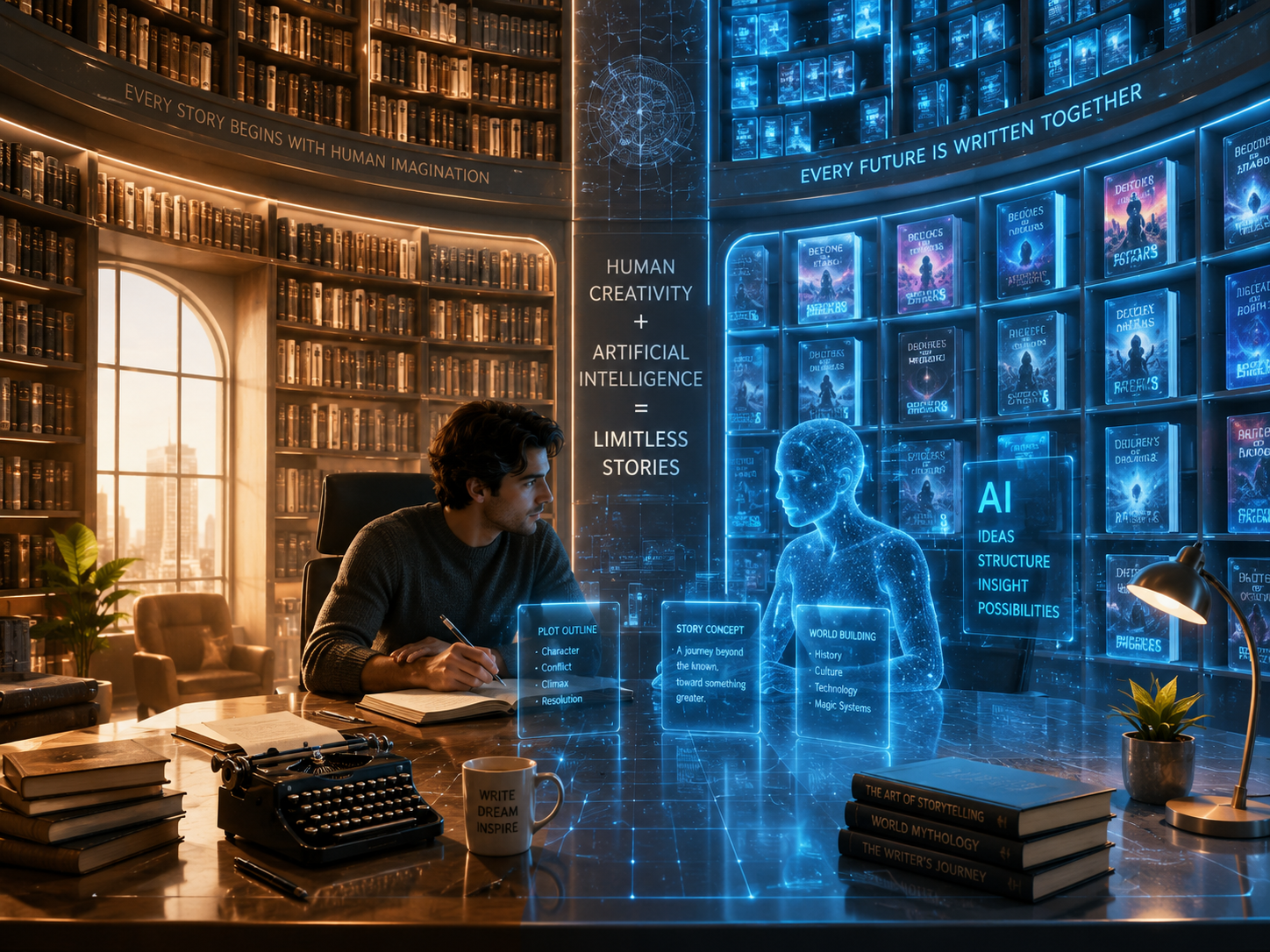
Plenty of writers now use AI tools for a rough first pass — getting a structural skeleton down, testing a few different openings, generating alternate endings to compare against their own instinct — and then do the real work themselves: adding specific details from actual experience, cutting the generic phrasing AI tends to default to, and making sure the voice doesn’t sound like it could belong to anyone. That hybrid approach tends to produce work that’s both efficient to produce and genuinely distinct, which is honestly where a lot of professional writing is already heading, whether people admit it publicly or not. If you’re experimenting with AI for story drafts or outlines, getting the prompt right makes a bigger difference than most people expect — our guide on how to write better AI prompts walks through exactly how to get sharper, more usable output from tools like ChatGPT.
For publishers wrestling with the disclosure question, one middle-ground approach worth considering is framing disclosure around the human editorial process rather than a blunt “AI-generated” stamp — explaining that a piece went through human review, fact-checking, and revision, rather than just flagging that a machine touched it at some point.
What’s Next for AI and Human Storytelling?
There’s still a lot we don’t know. Researchers have flagged open questions around whether these results hold up for longer fiction — a 100,000-word novel is a very different creative challenge than a short story, and sustaining character depth and emotional arc across that length is a different skill than nailing a tight, self-contained piece. Genre, cultural context, and reader age also likely shift how people respond, and none of that has been fully tested yet.
In the meantime, the writers I’d bet on long-term are the ones leaning into what’s genuinely hard for a model to fake: specific personal experience, original reporting, a consistent voice across a body of work built over years. Readers, for their part, would do well to practice judging content on what’s actually on the page rather than jumping straight to a verdict based on who — or what — supposedly wrote it.
Conclusion
The Villanova study doesn’t prove AI has “beaten” human storytelling, whatever the more sensational headlines might suggest. What it actually proves is that our instincts about spotting AI writing — and our assumptions about what human-made content automatically deserves — are a lot less reliable than most of us would like to believe. Quality and authorship turn out to be two separate things in the eyes of readers, and conflating them is where a lot of the confusion in this debate comes from.
For writers, that’s not really a reason to panic. It’s more of a nudge to double down on what genuinely can’t be faked — real perspective, specific experience, an actual point of view shaped by living an actual life. The future of storytelling probably isn’t a fight between human and AI writers. It’s a more honest reckoning with what actually makes a story worth someone’s time, regardless of who typed it.
Frequently Asked Questions
FAQ 1: Can AI really write better stories than humans?
In blind reader evaluations, yes — at least in the Villanova study, AI-generated short stories scored higher on quality and engagement than human-written ones. That said, this measures reader preference in a specific, short-story context, not some broader claim about AI being more “creative” or imaginative than people.
FAQ 2: Can people actually tell when a story was written by AI?
Not reliably. Accuracy in the study’s blind tests ranged from about 40% to 52%, which is close to random guessing. Detection likely gets even harder as language models keep improving.
FAQ 3: Does this mean human writers are going to lose their jobs to AI?
Most people who actually work in this space see it playing out as a shift in workflow rather than outright replacement. AI is good at producing polished, readable drafts fast; it’s not good at replicating lived experience, original reporting, or a genuinely distinct voice — and those are exactly the things editors and readers still value.
FAQ 4: Why did people rate AI stories higher even when they claim to prefer human writing?
It comes down to a mismatch between stated preference and blind-test behavior, tied to something researchers call algorithm aversion — the tendency to judge identical content less favorably once you know (or believe) it came from AI rather than a person.
FAQ 5: Should AI-generated content always be labeled?
There’s no clean answer here. Labeling builds transparency and trust, but research consistently shows it can also lower engagement and immersion, independent of actual quality. Publishers are still working out where the right balance sits, and reasonable approaches vary by industry and audience.
FAQ 6: Do these findings apply to all types of AI writing, like news articles or novels?
Not necessarily. This particular study focused on short fiction. Research on AI-generated news, for instance, still tends to show human-written content rated higher on expertise and credibility, largely due to what’s called the authority heuristic. Content type and context clearly matter.
Written by Caleb Morgan: Caleb Morgan is a technology and digital culture content writer covering AI, emerging technologies, and digital trends. His work focuses on explaining technology developments, research findings, and digital culture topics in a clear, accessible way, helping readers understand how innovation is shaping the way people create, communicate, and consume content.
Reviewed by: Editorial Review Team & Technology Content Specialists.
Disclaimer: This article is based on publicly available research papers, academic studies, official statements, news reports, and other reliable sources available at the time of publication. Research on artificial intelligence, human creativity, storytelling, and digital media continues to evolve as new studies and evidence emerge. Findings discussed in this article should be interpreted within the context of the original research and may not represent universal conclusions. Readers are encouraged to consult the referenced studies and official sources for the latest information. This content was initially drafted with AI assistance and has been carefully reviewed, edited, refined, and fact-checked by human editors to ensure accuracy, clarity, originality, and editorial quality.